
wrongful firing
Wrongful firing is a term that refers to an employee being dismissed from their job in a manner that violates the law or breaches the terms of their employment contract. While most employment is considered “at-will,” meaning an employer can terminate an employee for any reason or no reason at all, there are still legal protections in place to prevent employers from firing workers unjustly. Wrongful firing occurs when those legal boundaries are crossed.
There are several common scenarios in which wrongful firing can take place. One of the most prevalent is termination based on discrimination. Laws in many countries, including the United States, Canada, and the United Kingdom, protect workers from being fired due to their race, gender, religion, age, disability, or sexual orientation. If an employer dismisses someone on the basis of any of these protected characteristics, it constitutes wrongful firing. Even if the employer gives another reason for the termination, if it can be proven that discrimination played a role, it may still be considered unlawful.
Retaliation is another major cause of wrongful firing. Employees have the right to report illegal activity, unsafe working conditions, or harassment without fear of losing their job. If a worker is let go shortly after making such a report—or “blowing the whistle”—and there is evidence that the report was a motivating factor, that employee may have been wrongfully fired. Employers are not allowed to punish workers for asserting their legal rights, and doing so opens the door to potential legal action.
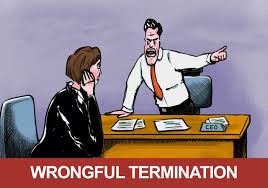
What is wrongful firing?
Another example of wrongful firing includes breach of contract. If an employee has a written or implied contract that outlines the terms of their employment, including conditions under which they can be terminated, and the employer fires them without following those conditions, it could be considered a wrongful firing. For example, if a contract states that an employee can only be dismissed for specific causes such as misconduct or underperformance, and they are fired without any such justification, they may have legal grounds to challenge the dismissal.
In some cases, wrongful firing occurs when an employer violates public policy. This could involve terminating an employee for taking time off to serve on a jury, vote, or serve in the military. Employers are legally prohibited from firing workers for fulfilling these civic duties. Additionally, if an employee refuses to perform an illegal act requested by the employer and is then terminated, that could also be seen as a wrongful firing under public policy protections.
The consequences of wrongful firing are significant for both the employee and the employer. For the employee, it can lead to financial hardship, emotional distress, and damage to professional reputation. For the employer, a successful wrongful termination lawsuit can result in financial penalties, reputational damage, and increased scrutiny from regulatory bodies. Employees who believe they have been wrongfully fired should consult with an employment lawyer to evaluate their case and determine their legal options. Documentation such as emails, performance reviews, and contracts can help support their claim. Understanding wrongful firing is essential for ensuring that workplace rights are protected and that fair treatment is upheld in employment practices.
